It is no secret that in order to achieve the success of a company, coordinated work, and financial stability, it is necessary to first of all adjust all processes within the enterprise. Sometimes in large and small companies there are difficulties when it comes to production management, because controlling all the necessary processes becomes time- and resource-consuming. However, this does not apply to those corporations that involve an ERP platform in their work.
In this article, we will describe in detail what an ERP system is, how it works, how it is useful for running your business, and how to choose ERP software so that it brings you benefits and convenience.
Definition of ERP System
An ERP system is an Enterprise Resource Planning (ERP) system that helps businesses automate all of their business processes and integrate various operations. ERP can include various types of activities such as human resource management, purchasing tracking, financial management, record keeping, and other important services that run a business.
In simple words, an ERP system is software that can manage many of the basic processes that occur in a company.
In today's environment, an ERP platform is one of the most essential systems integrated into a business, which significantly simplifies the procedure for collecting, organizing, and managing data.
History of the ERP System
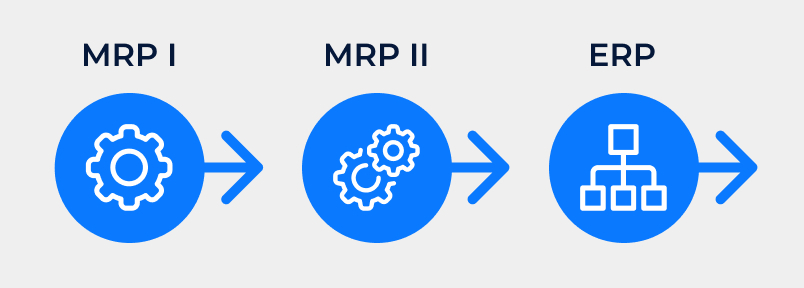
In the 1960s, when business activity began to develop rapidly, there was an urgent need to track and manage materials in order to organize them intelligently. It was then that, in order to clearly segment and competently analyze processes, the MRP system (Material Requirements Planning) was developed. This system greatly simplified the work of entrepreneurs, who could always track the presence and absence of all units: goods, tools, etc.
Already in the late 70s, additional, more advanced sets of principles and algorithms were added to the basic functions of the MRP system, which allowed for careful control of the amount of materials, more detailed analysis of the product condition, etc. The improved platform model was called MRPII.
The introduction of the MRP system into operation, its rapid development and widespread use, contributed to the creation of ERP software. The 1990s marked the beginning of a new era in the development of the enterprise resource planning platform. The developers implemented plans to expand the capabilities of tracking and managing all company processes. The ERP system includes the functions and operations of the MRP and MRPII versions, and is also equipped with a number of technologies that help in business development.
Thus, for more than 30 years, business companies of all sizes have been able to integrate ERP into their operations in order to collect and store information about the entire company.
Is GudHub an ERP System?
GudHub is not an ERP system in the literal sense of the word ERP, but its wide functionality allows you to implement any tracking in the company, plan enterprise resources and keep competent records of all necessary data. The GudHub CRM system for business is a universal single working platform that also regulates a set of business strategies, tracks all stages of work, interacts with current and potential leads and solves customer problems.
So, if you need high-quality resource management and tracking the availability and absence of materials/products/goods in your company, you can use the GudHub system, which is suitable for almost any business and will help bring order within the company.
ERP System Functions
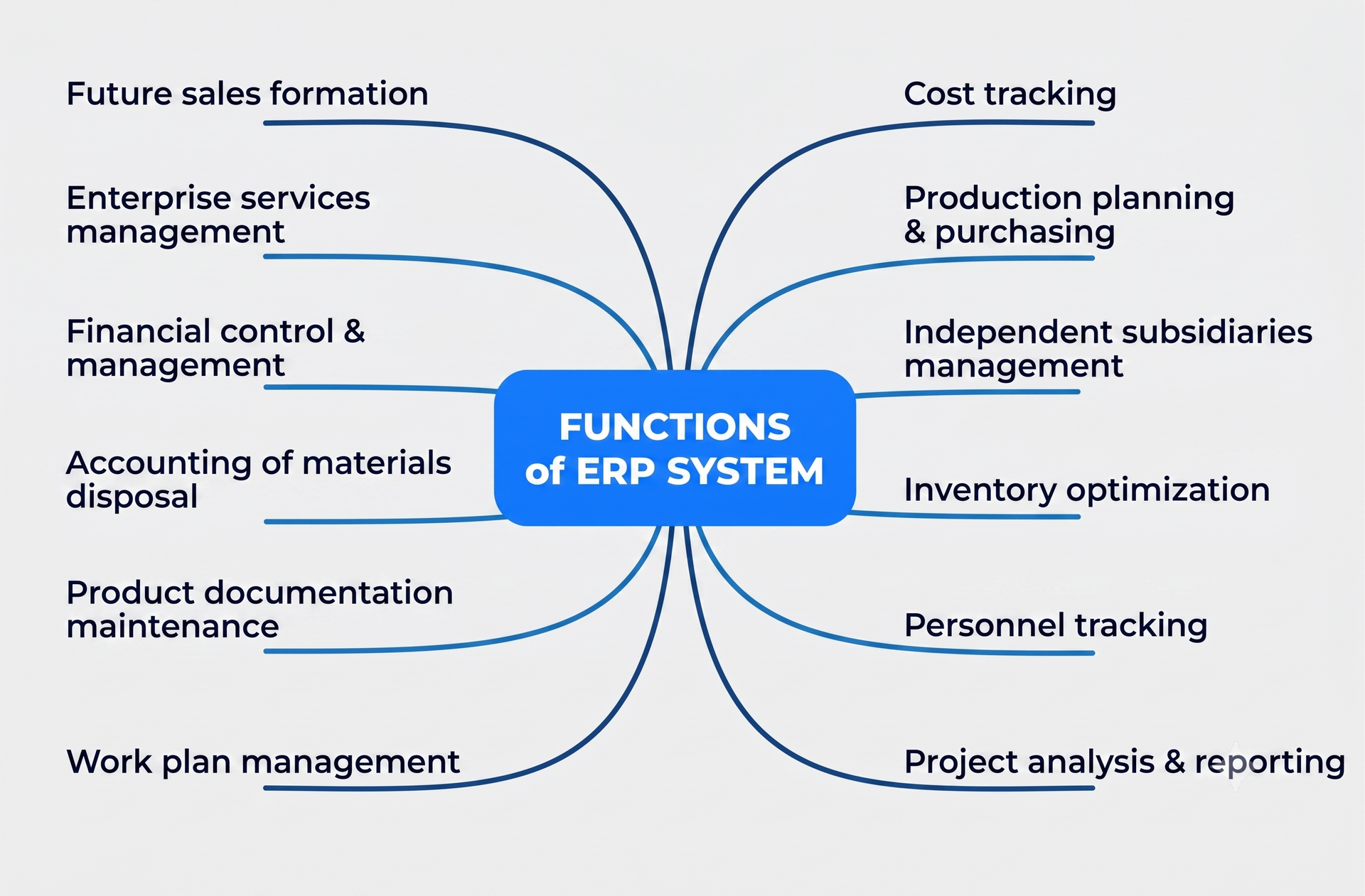
The ERP platform boasts a number of features that it provides to enterprises in working with resource accounting. Thus, we have prepared a list of the main functions of the ERP system that you can use by involving this software in your business. Here are the most common features:
- Formation of future sales;
- Formation of future sales;
- Production planning and procurement of goods;
- Accounting for the sale of materials;
- Inventory optimization;
- Expense tracking;
- Control and management of company finances;
- Work plan management;
- Maintaining documentation regarding the condition, availability and features of products;
- Analysis of completed projects;
- Monitoring staff performance;
- Management of independent enterprises;
- Enterprise service management.
The capabilities of the ERP system are limitless, so companies can not be limited to the proposed list of functions, but use this platform for various purposes for the enterprise. This will help provide the company's environment with competent and accurate automation of resources, without spending much effort on it.
Types of ERP Systems
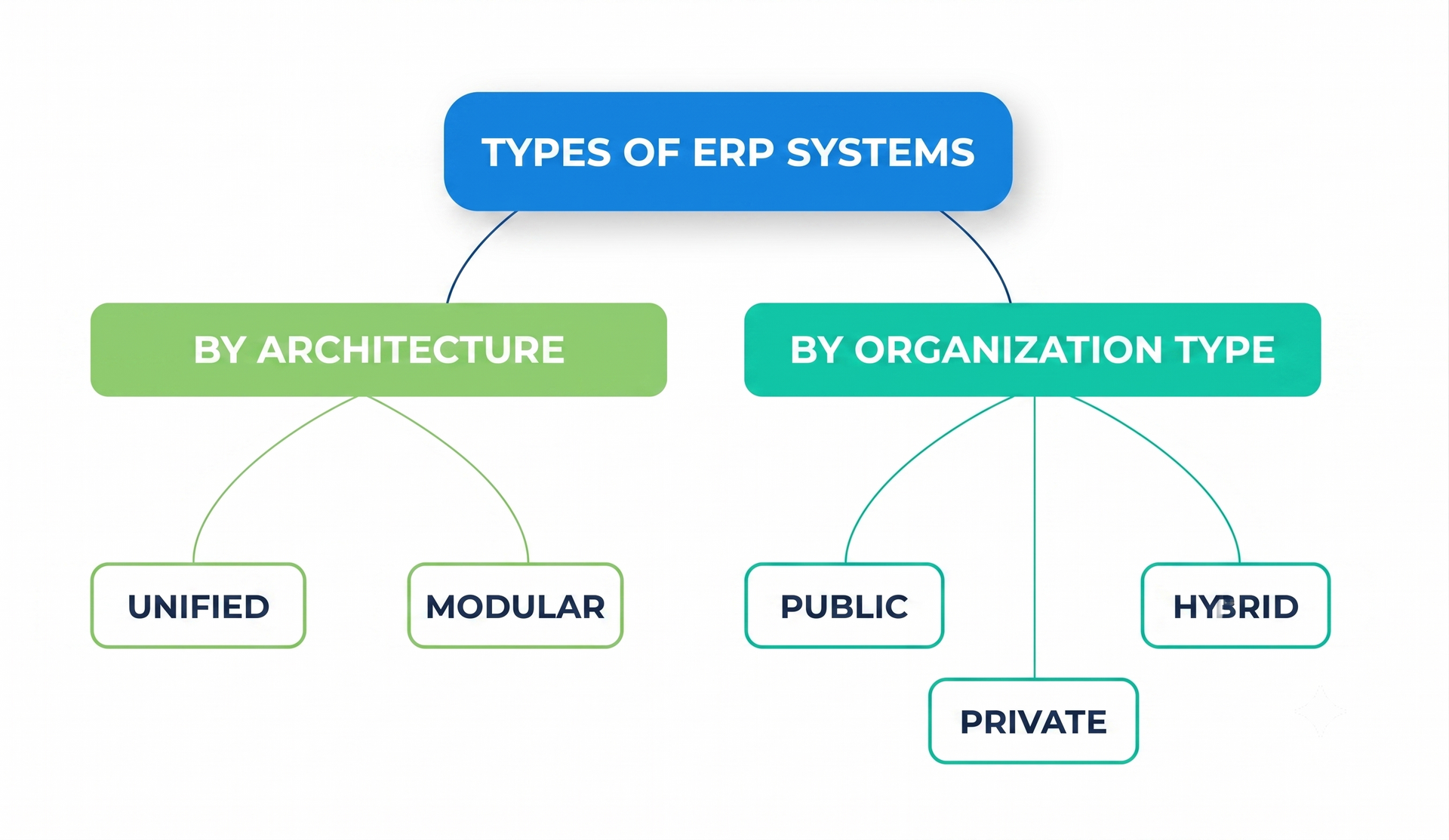
In order for a company to benefit from an ERP system, it is worth choosing the type that will meet the goals of your corporation. Systems can be classified as:
ERP Systems by Architecture: Unified and Modular
- An ERP system with a single architecture is a universal data processing tool that is characterized by its ease of use and excellent security system. A unified architecture of this type does not allow for major changes and expansion of the platform with additional functions, which can sometimes limit the company's operations.
- Unlike a system with a single architecture, modular ERP systems allow you to expand your functionality by providing the ability to develop blocks. Thus, you can add the necessary categories yourself, or remove them if necessary, because each of the blocks is independent of each other. However, when using and introducing changes to such a system, there is a risk of making a mistake while maneuvering the blocks.
ERP Systems by Organization Type: Public, Private and Hybrid
- Public ERP systems are affordable platforms that allow users to freely access the system. When using this type of system, it is worth remembering that security is not guaranteed.
- Private systems are characterized by higher fees for use, but they also differ from the previous type in the limited number of users who can interact on the platform. The difference from public systems is security.
- Hybrid ERP systems are a combination of both public and private. They are flexible in use and development, but the price is quite high.
ERP System Structure
To better understand the work of Enterprise Resource Planning, it is worth analyzing the architecture of the ERP system and its main components. Such typical software consists of two parts, namely the platform and modules, which organically interact and help enterprises.
ERP Platform
One of the blocks, the platform, is the main component of the ERP system, which consists of three parts. The first is the core, where all processes are carried out. The second is the basic functions. And the third is the data management system. As a rule, these parts include tools and functions for processing and storing data. The platform is the foundation of ERP, therefore it is unchanged in the system itself.
ERP Modules
ERP system modules are independent components that can be included or removed from the system if necessary for the needs of the company. This component of the ERP system allows the enterprise to expand its capabilities, develop, and implement new processes in its work. By using modules, each enterprise can customize its work. Among the different types, the main ERP system modules are distinguished:
- Production management: Operations management, planning of subsequent processes, etc. are carried out;
- Financial management: Accounting for settlements, financial expenses and profits is maintained;
- Supply management: Supplies and shipments are regulated, and the company's logistics activities are analyzed;
- Personnel management: Data on wages and working hours are tracked, and employee performance is analyzed;
- Project management: Projects are monitored from the beginning of their implementation to the presentation stage;
- Customer Relationship Management: Customer information is collected and processed;
- Resource management: The presence and absence of materials, products, etc. is tracked;
- Asset Management: Asset management is performed (intellectual property, inverter, etc.).
Where to Find ERP Systems
ERP system is such a versatile platform that it is in demand in different types of organizations. It doesn’t matter if you are the owner of a small, medium or large business, having ERP in your work can guarantee you clear data segmentation, competent analysis and control. Thus, the enterprise will be able to focus special attention on the most important details, organize everything and bring order to the company.
ERP is a useful platform for any business: trading companies, service industries, or logistics corporations, educational systems, or even in the field of health care. In general, every company can use this software to regulate all the necessary work processes.
Pros and Cons of ERP Systems
Implementing an ERP platform is an integral part of the effective functioning of companies. However, using this system, you can observe both advantages and disadvantages. Therefore, before involving ERP in your work, familiarize yourself with both sides of the coin.
Advantages of ERP Systems
The popularity of using ERP systems is growing. This is not surprising, because the platform has many advantages that help enterprises to be more efficient in their work and improve company processes. Among such advantages are the following:
- A single universal enterprise resource planning platform;
- Full understanding of the availability and absence of goods;
- Time saving and data management;
- Fast and accurate documentation;
- Ease of use;
- Safety and reliability;
Disadvantages of ERP Systems
Along with the advantages, you can also observe some disadvantages in the operation of ERP systems:
- High development cost;
- Ongoing modernization;
- The need for detailed platform development.
ERP System Selection Criteria
If you decide to involve an ERP system in your work and successfully configure all the company's processes, simply using the platform is not enough. For further order and efficiency in the company, first of all, you need to choose the ERP that will meet the requirements of your enterprise. Next, we will prepare 3 criteria that you should pay attention to so that the choice of an ERP system is truly successful.
- First of all, analyze your company's needs: both general processes that need to be regulated, as well as additional features and directions of the enterprise. Set a specific task that you want to perform with the help of an ERP system and find out how the platform will help with this.
- Be aware of the cost of an ERP platform. A company should note that a single purchase will not be enough. For the company to work smoothly and maximize productivity, the enterprise resource planning system will require continued updating and support.
- Pay attention to the system configuration and its type. Integration, built-in analytics, international support, and system automation are things that can expand the horizons of an enterprise and significantly simplify work, saving time and resources.
What is the Difference Between ERP and CRM?
As mentioned earlier, an ERP system or Enterprise Resource
Planning is a software that regulates all processes of enterprise resource planning. The system processes data from all departments, combining or segmenting them. ERP has such a wide range of solutions that it can perform everything from calculating orders or collecting documentation to regulating logistics processes or accounting.
A CRM system, or Customer Relationship Management, is a customer relationship management system. This platform works only with customer data that may be of interest to the company. A CRM system organizes information into categories, allowing the company to find a target audience and establish contact with potential customers.
Although the purpose of these systems is significantly different, the common feature is that both the ERP system and CRM work with data, thereby simplifying the company's work and increasing the efficiency of the business environment.
The Future of ERP Systems
Analyzing the use of ERP systems in the modern world, we can predict that more and more companies will involve Enterprise Resource Planning in their work. Such implementation will help scale enterprises and significantly simplify the work of specialists who collect and process data in other ways.
A large number of corporations that have already implemented an ERP system and use its tools see the benefits of using such an assistant in their work. Significant implementations, updates, and overall benefits only improve work processes.
Experts believe that one of the key factors in the future of ERP is mobility. This means that enterprises using cloud software can keep records and manage resources from anywhere in the world, thereby significantly simplifying resource planning, ensuring security, and reducing the cost of hardware maintenance.
Other factors include flexibility and integration. Business owners are likely to implement an ERP platform to leverage a variety of features and tools, as well as integrate other systems with ERP. This will give the company unlimited horizons and allow it to maneuver resources with ease.
Conclusion
In summary, an ERP system is a software that automates the process of enterprise resource planning. This platform helps regulate various internal and external processes of a company, providing business owners with clear and organized information.
The beginning of the use of ERP platforms in the work of corporations dates back to around the 1990s of the last century, and was formed as a logical continuation of the MRP system, and its version MRPII. Even then, developers expanded the capabilities of companies that implemented this software in their work.
The ERP system allows you to easily manage resources: systematize the number of goods and costs, keep track of documentation, plan and track projects, and much more. The wide functionality of the system can guarantee you a number of advantages, such as significant time savings, a clear understanding of the availability and lack of materials, security and support. In addition, the ERP system can boast a wide variety of types that you can choose based on the needs and finances of the company.
Along with the advantages, there are also disadvantages of using the system, which can significantly affect the work and state of the company. Among such disadvantages may be the high cost of platform development, long-term implementation, and a clear understanding of the system's operation.
So, the ERP system is a breakthrough of the future that will be a reliable assistant for companies that need coordinated and clear work in planning enterprise resources.