In today's information environment, companies use various methods that help them find data about users, process this information and effectively interact with the audience. However, not all concepts are as effective for the business as possible, and may require significant resources from the company. In today's information environment, companies use various methods that help them find data about users, process this information and effectively interact with the audience. However, not all concepts are as effective for the business as possible, and may require significant resources from the company.
That’s why, in this article, we’ll provide you with detailed information about a powerful tool, CDP or customer data platform, that is revolutionizing the way customer data is collected, identified, and analyzed. You’ll learn all the benefits and applications of CDP technology, which will allow your business to create deep insights, aligned approaches, and effective engagement with leads.
Definition of CDP (Customer Data Platform)
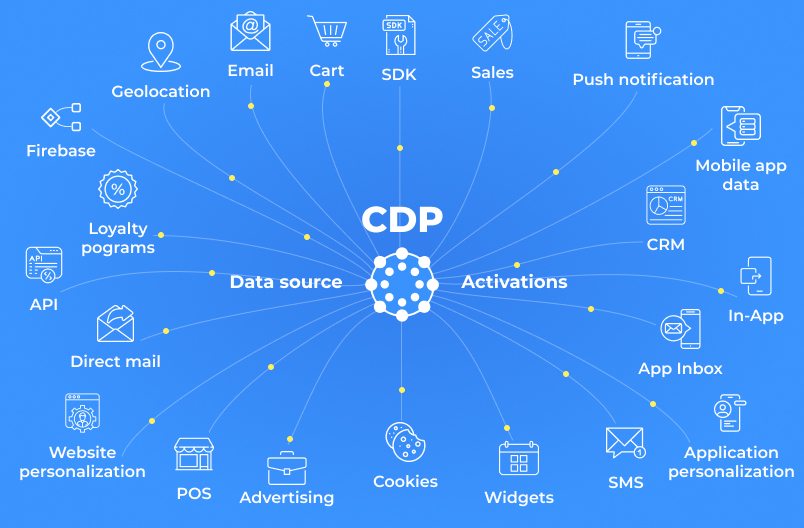
A CDP is a customer data platform that collects, processes, structures, and aggregates information about lead actions. The stored customer data can be taken from various online and offline sources, such as websites, apps, browsers, offline checkouts, CRM systems, and more.
This software allows you to analyze and record any user activity, such as orders, searches, or even just clicks on the site. This way, the company receives information about the potential customer. The CDP platform then uses the lead data and can improve business efficiency and productivity of the enterprise.
Reasons for the Origin of the CDP System
Collecting, managing, and centralizing data using a CDP platform is a relatively new concept for finding information about users. As marketing activities began to gain momentum and develop rapidly, the need for advanced analysis of user actions also increased. Companies began to collect information on purchases, page visits, and other actions of potential customers, thereby providing a complete picture of consumer demand and satisfaction.
At first, companies used only CRM systems to collect information, but since about 2010, CDP platforms have been rapidly involved in the process for advanced data collection and processing, holistic analysis of customer behavior and preferences. Also, the customer data platform provides significant simplification of companies' work, time savings, and thorough data processing.
The customer data platform has now become a critical component of modern marketing technology. The growth and development of this platform continues as companies strive to become more data-driven and customer-centric in their strategies.
Why Do You Need a CDP (Customer Data Platform)?
As mentioned above, the need to use a CDP platform for businesses is becoming more and more necessary every day. This is due to the goal of processing the maximum amount of data in the minimum amount of time.
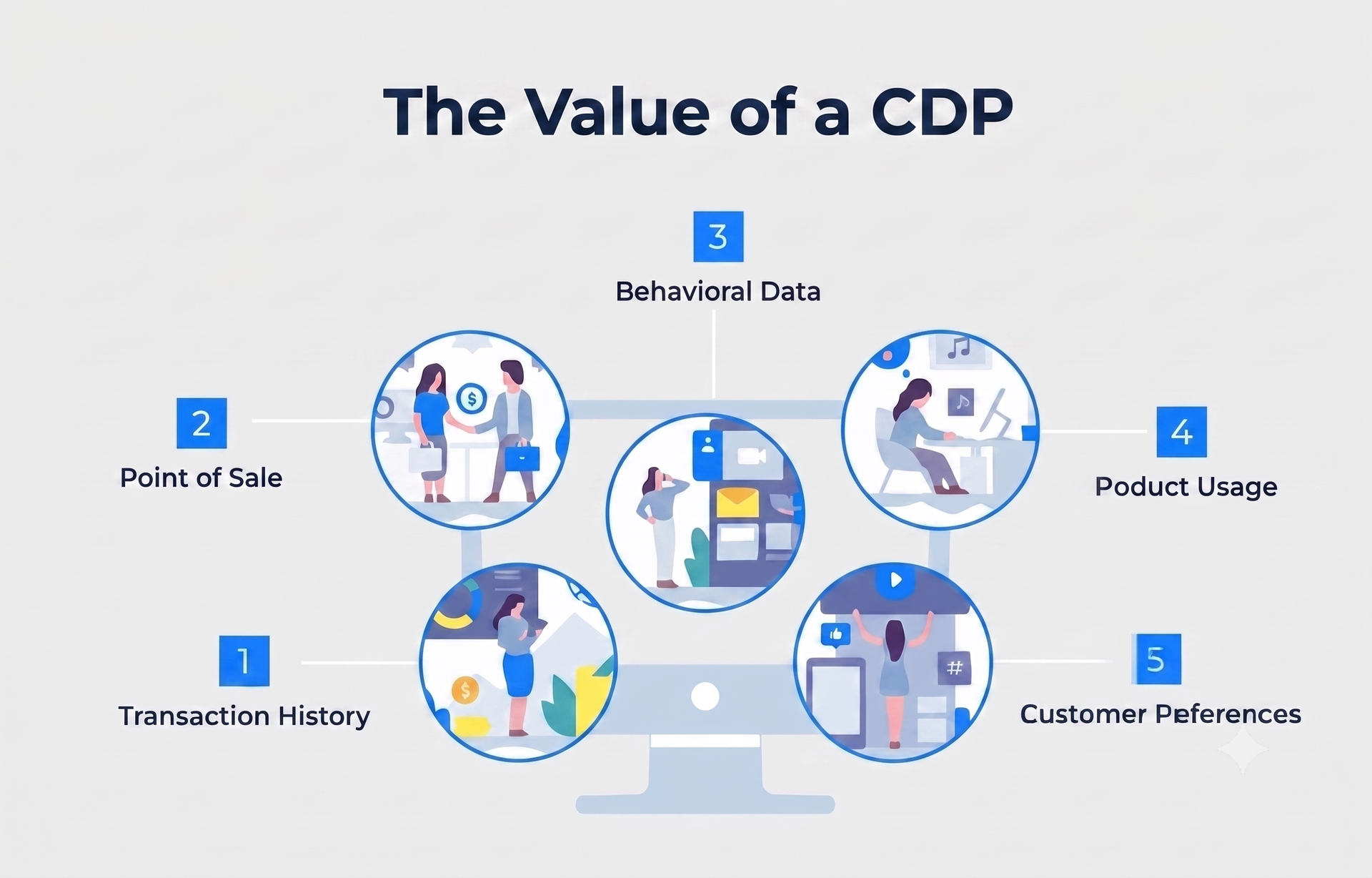
We suggest you consider below a number of good reasons to use a customer data platform and learn more about how they can be useful.
- Data collection: A customer data platform provides a company with a comprehensive view of each consumer who could later be your potential customer. Thus, the company conducts analysis of the collected data, which will be useful in building business strategies in the future.
- Data Optimization: Another compelling reason to use a CDP is to optimize data operations. By using the platform, companies can segment and cleanse data, reduce duplication, control quality, and ultimately improve business process efficiency. CDP technology helps in meticulously organizing information, expands company capabilities, and ensures financial growth and loyalty.
- Marketing: Involving CDP in marketing is a great way to improve a company’s performance. Marketers can use data to create more targeted and effective campaigns, which can in turn lead to higher conversion rates and better ROI.
- Advertising: In addition, CDP in advertising is an improvement for the company environment. With the help of a customer data platform, companies can quickly promote products and services, improve processes, and promote their business.
Advantages and Disadvantages of Using a Customer Data Platform (CDP)
If you still have doubts about using CDP technology to grow your online business, you can see the advantages of this system and learn about the disadvantages you may encounter when using CDP.
| Advantages | Disadvantages |
|---|---|
| Fast data collection | Long system setup |
| Segmentation and competent analysis | Working with limited data |
| Marketing improvements | Frequent updates |
| Improving advertising activities | Some disadvantages of data segmentation |
| Advanced analytics | |
| Security | |
| Involving artificial intelligence and machine learning |
Pros of CDP
- Rapid information collection: Data collection is an important function of a CDP, as it allows you to respond to customer events and actions in real time. The customer data platform uses powerful algorithms and technologies to ensure that information is processed immediately.
- Segmentation and analysis: The division of customer interests into categories is an important factor for every company. Therefore, an improved procedure for dividing, analyzing or eliminating data will allow you to identify more leads and sort out information that is not important to the company. This will help you develop your business faster and better, without wasting resources on secondary things, but on the contrary, focusing on the main thing.
- Marketing Improvement: CDP in marketing is about improving demand generation and customer satisfaction. In addition, this platform has a number of tools and features for working with big data, which allows a company to expand its horizons quickly and efficiently.
- Improving your advertising campaign: With the right approach to finding the right audience, you can run ads that are specifically targeted to the customer who is interested in your services. In this case, CDP in advertising will help to achieve increased sales efficiency.
- Advanced analytical reporting: The next advantage is the ability to work with data in one place, while simultaneously replenishing and updating the system with new information about the user.
- Security: Customer data platform ensures absolute confidentiality of user data, meeting all security requirements. Therefore, using the customer data platform does not carry the risk of customer information leakage.
- Using AI and machine learning: By incorporating CDP technology with integrated artificial intelligence into your work, workflows can become faster and simpler. You can work with recommendations, reducing the time spent searching for a target audience.
Cons of CDP
- Long system setup: As a rule, setting up and launching a CDP system is not a quick process. Sometimes it can take several months to set up and systematize the platform.
- Limited amount of data: Although the customer data platform collects the maximum amount of data about the customer, the company may still need some accuracy. The platform always looks for data from the original source, and cannot use the help of third-party sources, thereby limiting itself to a certain range of data.
- Frequent updates: Because customer data can change constantly, a company should periodically update the code and make sure the information in the system is relevant. This will help segment the data needed and remove unnecessary data.
- Data segmentation shortcomings: While a CDP platform may boast clarity in categorizing data, there is one flaw that can hold the system back. A customer data platform cannot segment customer data coherently if it does not contain personal user information, but only recorded behavioral information.
Data segmentation shortcomings: While a CDP platform may boast clarity in categorizing data, there is one flaw that can hold the system back. A customer data platform cannot segment customer data coherently if it does not contain personal user information, but only recorded behavioral information.
How Does the CDP System Work?
To better understand the customer data platform process, we suggest considering a comprehensive algorithm where we shed light on each stage of information management.
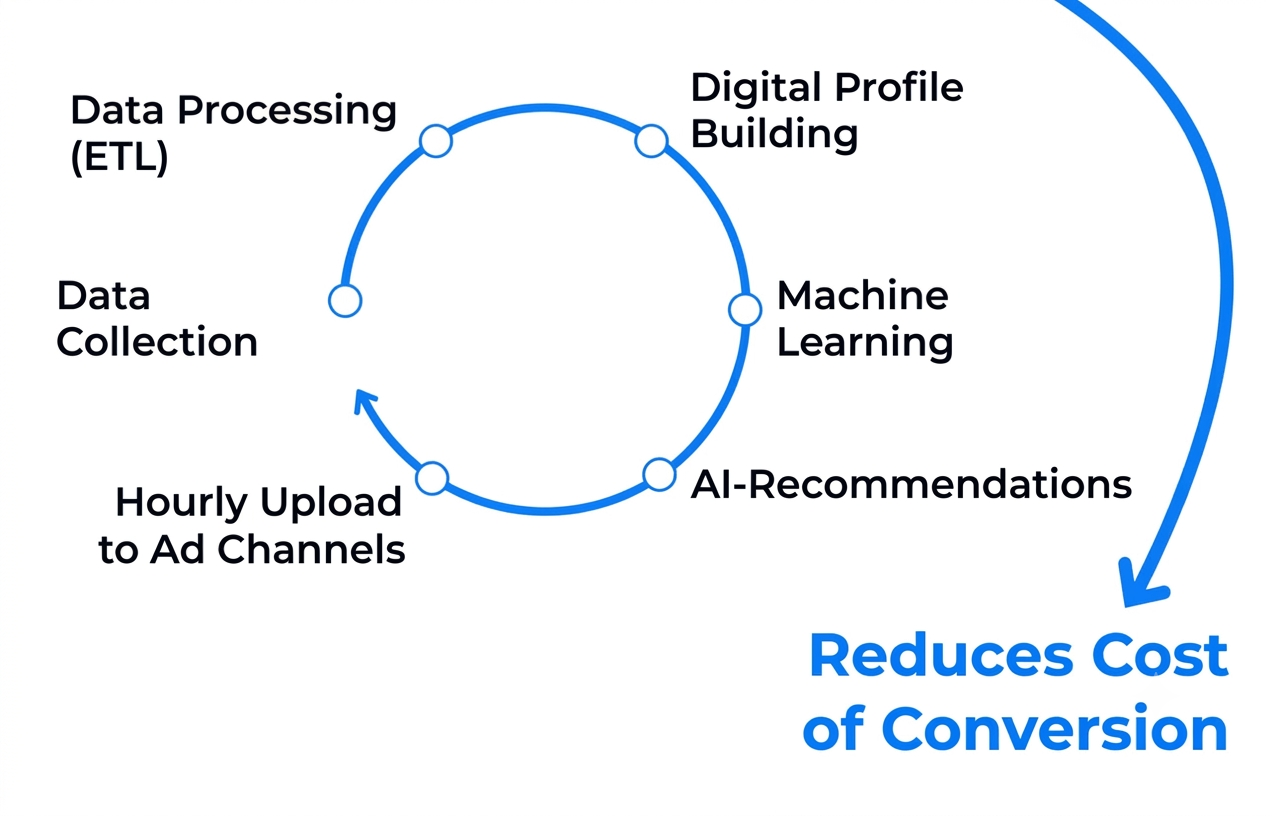
So, the first step in working with target audience data is to find it. The CDP platform collects every important element of information about a lead based on behavioral (interaction with various applications, websites, ads, SMSs, etc.) and demographic characteristics (name, place of residence, etc.).
The next step is data organization and segmentation. The system consolidates all data in one place, and then divides everything into categories according to various parameters, thus clarifying all the user's needs.
After the data distribution process, customer information is transferred to a cloud service, where it is processed, as well as stored and can be accessed for further analysis and use.
Another important step is to predict the next steps of customers. The customer data platform analyzes all the previous actions of a potential lead and builds the probability of their further paths, allowing the business to more easily adapt to customer needs and respond to their requests in a timely manner.
The last stage is to bring data into action. The company actively works with potential clients, finds an individual approach to them, adjusts communication with them, implements agreements and achieves set business goals.
How Does a Customer Data Platform Differ from Other Platforms?
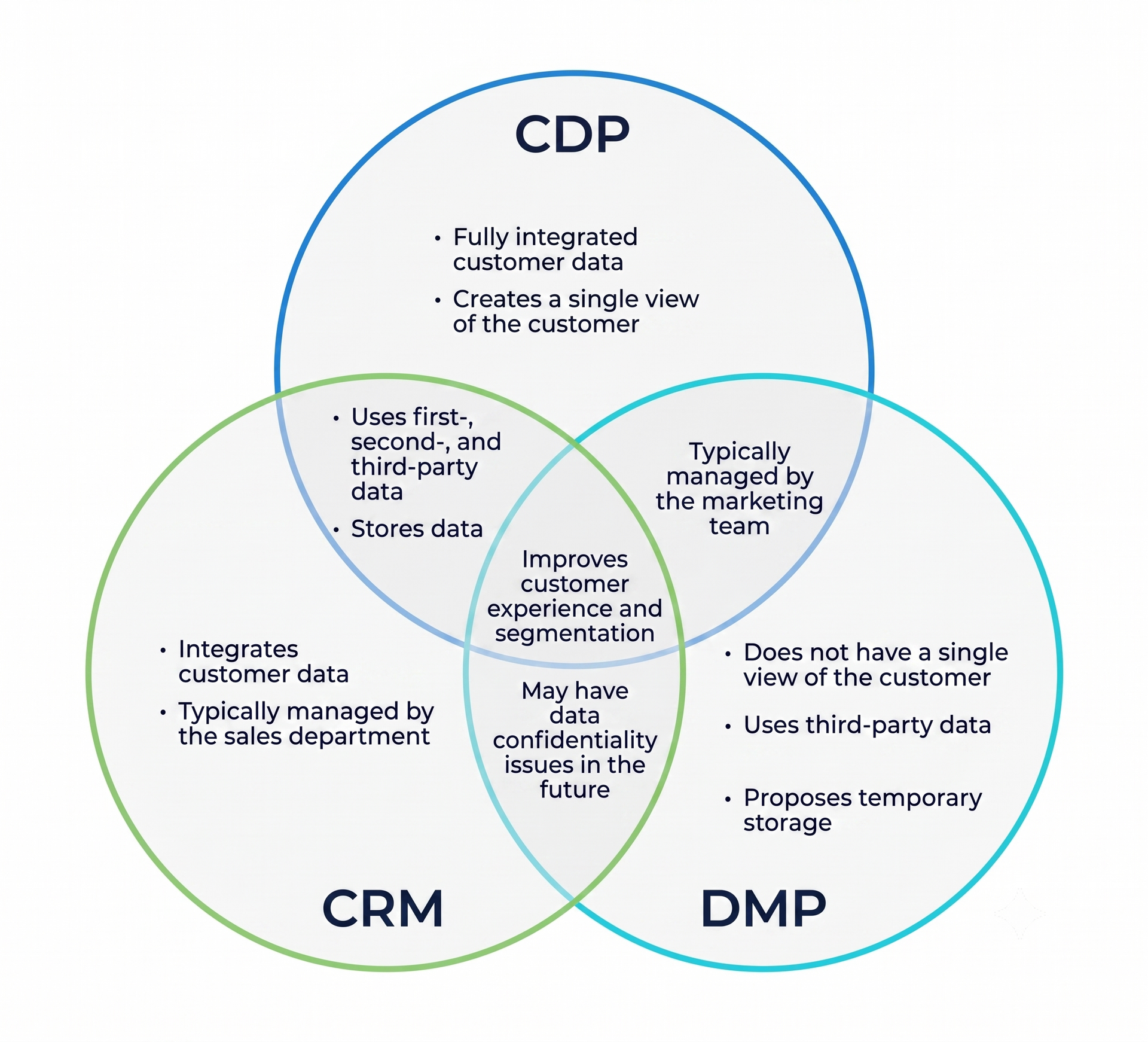
In order to work with customer data, companies often use different ways to find information about them and interact with them. There are different systems such as CDP, CRM, DMP, etc. Indeed, all of them can help set up a connection with leads, but not all of them work the same. Therefore, let's consider the significant difference between the listed platforms!
CDP vs DMP
As we defined earlier, a CDP is a platform that allows you to collect data about a lead from various sources, based on their behavior in real time. The system processes all the actions that were taken, for example, on the website, analyzes clicks and searches, finds characteristics about the client that can be useful for the business process.
The main difference between a DMP and a customer data platform is the type of data that the system collects. A data management platform focuses only on anonymous information about the user, which is not personal. Data about the client regarding his actions can be taken from third-party sources such as: partner sites, applications, etc. Moreover, the DMP system is classified into three categories of data retrieval: First-Party, Second-Party and Third-Party. The DMP platform collects data with the aim of improving the company's advertising and marketing. Another feature is that this system has a short-term data storage period, which cannot be said about the CDP platform.
CDP vs CRM
A CRM system, or customer relationship management system, focuses on a narrower meaning, namely the processing of information that is based directly on the customer's interaction with the company. This means that it is aimed at using data about customer contacts and transactions to improve and provide communication services. A CRM system allows a company to keep a history of customer interactions, manage contacts, segment data, and automate customer communication processes.
GudHub CRM system is a unique platform that combines CRM, CDP and DMP functions, providing comprehensive customer data collection and analysis. It is ready to help you easily find and interact with your target audience.
Conclusions
CDP is a comprehensive platform for creating, unifying, processing and storing customer data for the purpose of carefully selecting the company's target audience. This tool collects data about the customer based on his demographic and behavioral characteristics. Data search occurs on various platforms: social networks, websites, applications or even offline sources.
Using CDP technology in business allows companies to find leads, saving the company's efforts and time. Moreover, the main goal of the company is to increase the level of sales of goods and the use of its services. CDP guarantees fast and thorough information collection, competent data segmentation, advanced analysis, improvement of marketing and advertising activities, security, and satisfied customers. Together with the built-in AI function, the customer data platform is a convenient tool for predicting the next steps of customers and establishing an individual approach to each lead.
So, for rapid development and scaling of the business, company owners pay special attention to finding customers, and the CDP system helps them with this. So don't waste time and use this tool to take your business to the next level!