It all began in the United States in the late 18th century. A web of wires blanketed the streets of Manhattan, New York, as telegraphy—and subsequently telephony—began to develop rapidly. While businesses received a massive boost in communications, they also faced chaos when it came to storing and retrieving their clients' phone numbers.

Recognizing the need for a way to manage and retrieve contacts, Arnold Neustadel invented the Rolodex in 1958. It was a revolutionary rotating device for contact organization that allowed users to arrange and search for contacts alphabetically. This served as the first prototype for modern CRM systems, which initially focused primarily on contact retrieval. However, businesses needed to store more than just contact details, and unfortunately, the small Rolodex card could not accommodate that much information.

In the late 1980s, store shelves were flooded with personal computers. Finally, the PC became accessible to the general public. A few years later, the Windows operating system appeared, bringing with it a multitude of software developers..
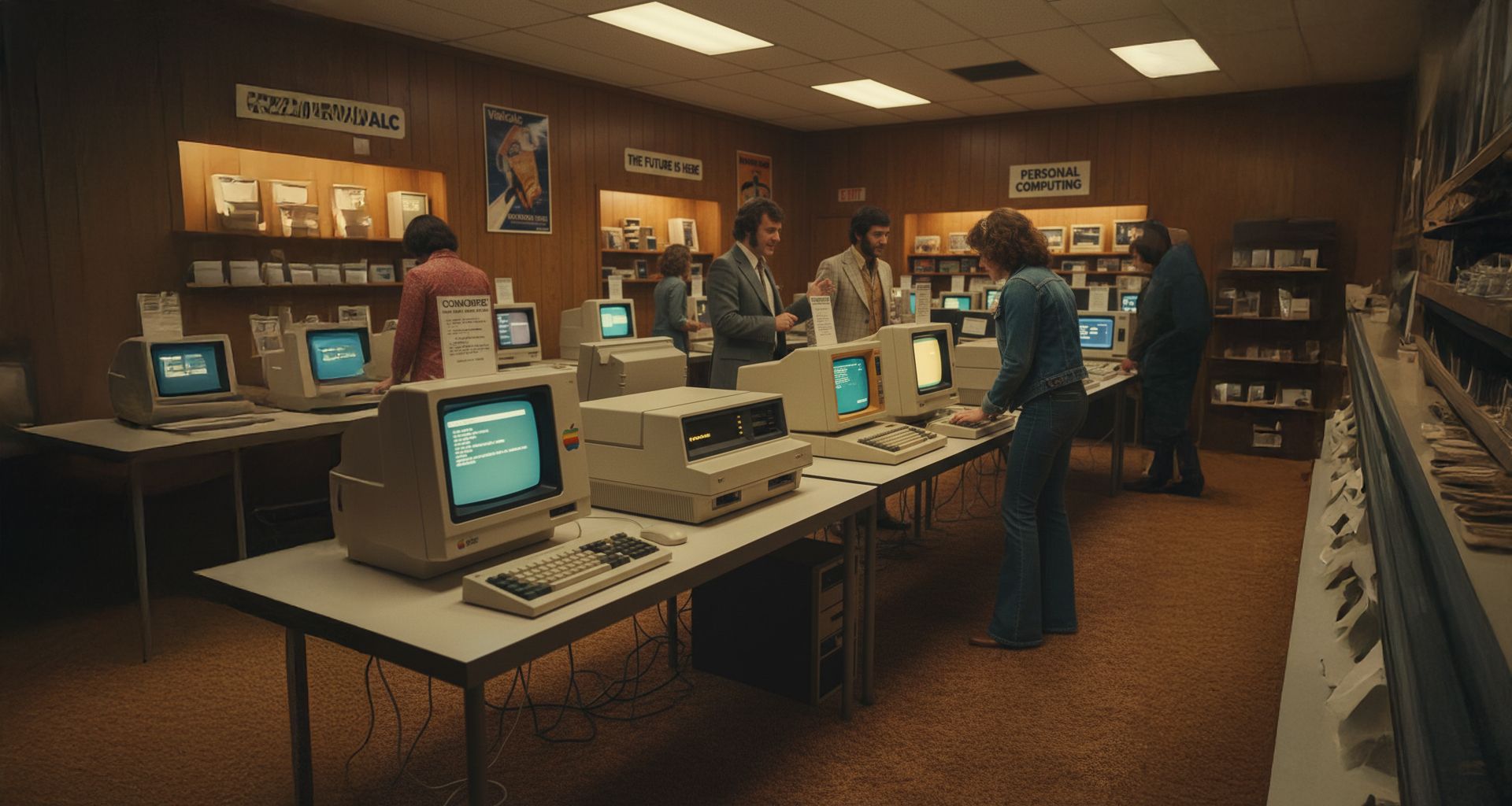
Among such developers were Pat Sullivan and Mike Money, who released the first CRM system, named ACT!, in 1990. It was essentially a digital Rolodex where users could store thousands of client contacts and—most importantly—keep a record of client interactions, such as which products or services a client had purchased or the current stage of negotiations. This revolutionized the world of sales forever!

Unfortunately, however, another problem arose: there were several salespeople, each using a separate CRM system with unsynchronized data. This led to instances where salespeople might simultaneously attempt to sell to the same client without realizing it—a situation that had a very negative impact on sales.
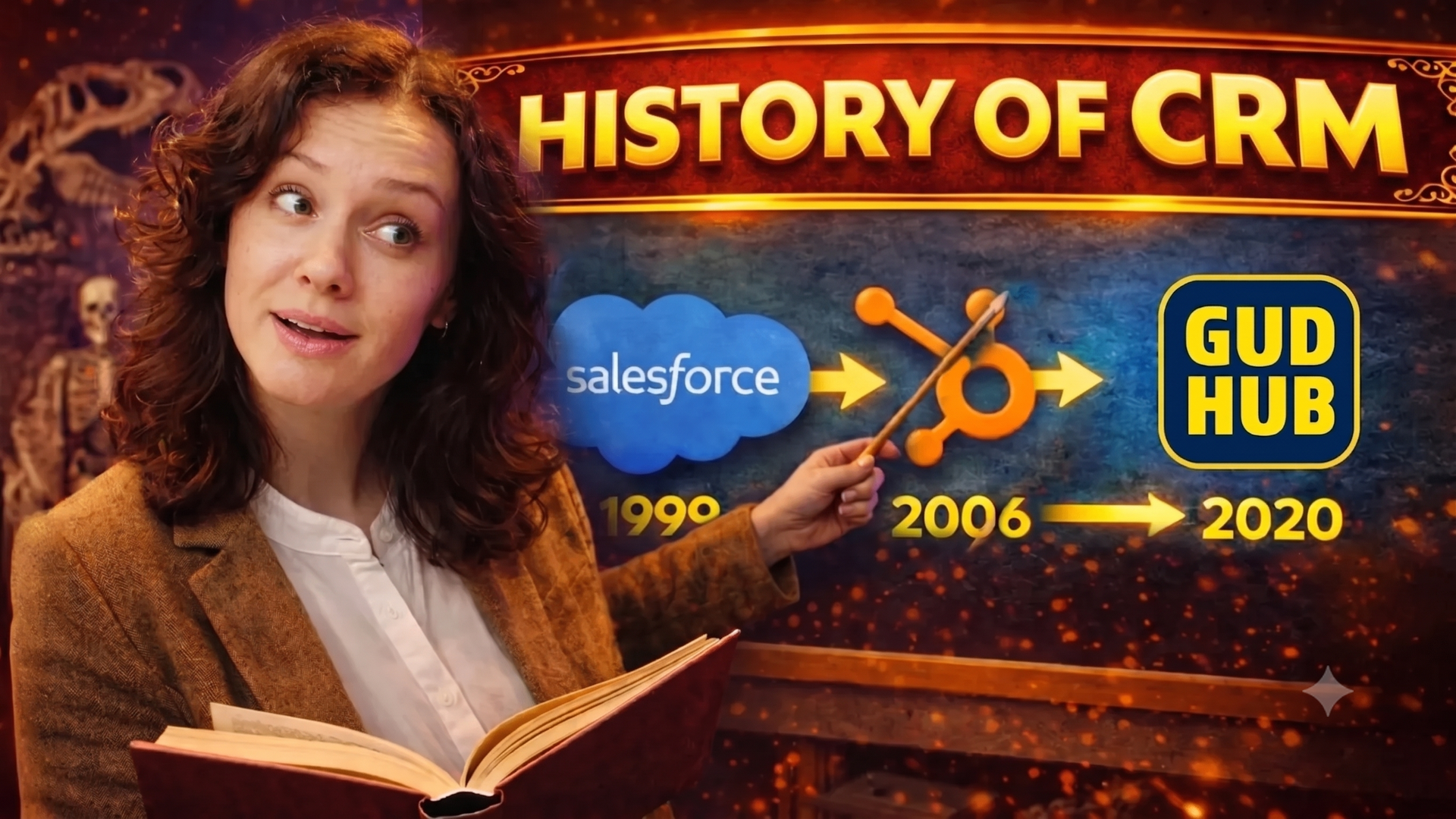
Then Marc Benioff enters the scene; in the 2000s, he and his partners launched Salesforce—the first cloud-based CRM system—which sparked a true revolution in the world of CRM systems!

The main advantage was that various salespeople now had access to the same data 24 hours a day, seven days a week, from anywhere on the planet.
Salesforce is gaining increasing popularity. Logistics, legal, pharmaceutical, and other companies are beginning to use CRM in their sales operations, only to encounter a significant challenge: it turns out that a CRM system well-suited for a logistics company is not particularly appropriate for a pharmaceutical firm—and is entirely unsuitable for a law firm.
In 2014, while developing software for various businesses, the company Atlasiko devised a revolutionary solution that finally addressed the issue of process differences across industries: the GudHub CRM system. It allows users to customize CRM settings to their specific needs—a development that marked a true revolution in CRM implementation.

So, what is a CRM system? A CRM system is a system where you store your clients' contact details and keep a record of the history of calls and correspondence with them. That is precisely why the term translates from English as "Customer Relationship Management system."